
I am rebuilding a Rover V8 and its my first time engine building so I am a complete newbie. I have been reading my book 'How to powertune a Rover V8' and it mentions polishing/cleaning up the inlet and exhaust ports in the heads. I have my heads off now and they are in general good condition. a good clean to get some grott off and they will be okay I think. Whilst I have them off is it worth me doing some grinding polishing work on the ports?? I am a dab hand at using a dremel but I need some instruction as I am a newbie.
Is it worth me doing this? If so is there a half decent guide anywhere?
Guide to head porting
Moderator: phpBB2 - Administrators
-
topcatcustom

- Forum Contributor

- Posts: 2965
- Joined: Sat Aug 09, 2008 11:53 am
- Location: Essex
- Contact:
Will be hard work with a dremel, Ideally you need an air die grinder, and tungsten carbide bits, I have a set like this which is excellent http://cgi.ebay.co.uk/Snap-On-Blue-Poin ... 4cefc2c54c
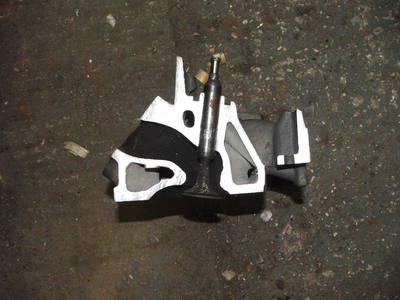
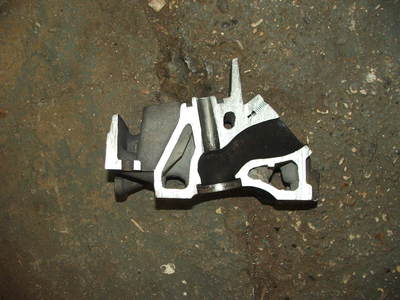
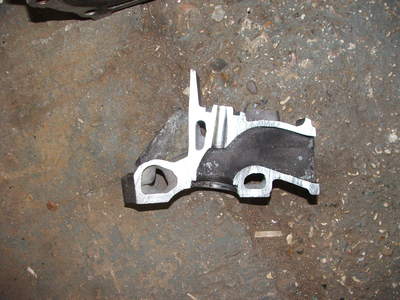
and a blue point grinder to go with, though you can pick them up much cheaper if you go with a cheap brand. Use some cutting spray lubrication and it takes the metal off much faster too. I'll let someone else explain exactly where needs to come off, there are some port pics from Chris on this site somewhere from when he cut a head in half and you can see the restrictive parts!
and a blue point grinder to go with, though you can pick them up much cheaper if you go with a cheap brand. Use some cutting spray lubrication and it takes the metal off much faster too. I'll let someone else explain exactly where needs to come off, there are some port pics from Chris on this site somewhere from when he cut a head in half and you can see the restrictive parts!
TC

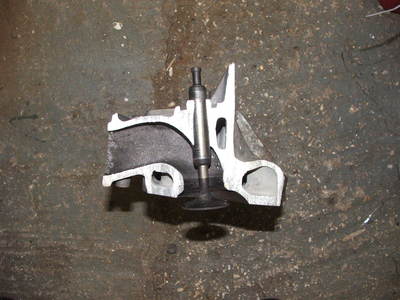
Shame I don't have a air grinder. Looking down the ports just taking the crud off in there would help I think.
Is it just a case of making the air flow better so therefore reducing the small casting lumps and bumps would help? Or is taking a serious amount of metal the way to go. If so why didn't rover just do it in the first place?
Is it just a case of making the air flow better so therefore reducing the small casting lumps and bumps would help? Or is taking a serious amount of metal the way to go. If so why didn't rover just do it in the first place?
-
topcatcustom
- Forum Contributor
- Posts: 2965
- Joined: Sat Aug 09, 2008 11:53 am
- Location: Essex
- Contact:
You can see in Chris' pics that where the guide sticks down- it also carries a lot of excess ally with it which chokes the ports. -However- they were cast like that for a reason, and if you modify them much dont expect to retain your fuel economy. If you just smooth/polish them then it may improve marginally- but if you push out the guides and port the restrictive sections etc then you will see a big power gain but more than likely at the cost of fuel economy.
Of course there is still the old arguement of whether polished or rough cast inlet ports produce more power....
Of course there is still the old arguement of whether polished or rough cast inlet ports produce more power....
TC


TC, can you explain that a bit more or point me to a website that explains that please, I made the assumption (possibly wrong now) that smooth ports would be better than roughtopcatproduction wrote:Of course there is still the old arguement of whether polished or rough cast inlet ports produce more power....

Big Tone
www.cobratone.co.uk
www.cobratone.co.uk
here you go! 
http://en.wikipedia.org/wiki/Reynolds_number
it's all about which side of a critical flow regime you recon your port operates in, low reynaolds number (equates to low speed surface flow in a low pressure environment that is likley to remain turbulant once it gets in that state as opposed to a high speed higher pressure laminer flow environment that will revert to laminer flow when the flow is disturbed. Guess what flow in a port goes between both states twice each cycle you have to guess in which state it spends the greater part of it's time!
rough walls work best for low reynolds number smoothe for laminer flow.
Best regards
Mike
http://en.wikipedia.org/wiki/Reynolds_number
it's all about which side of a critical flow regime you recon your port operates in, low reynaolds number (equates to low speed surface flow in a low pressure environment that is likley to remain turbulant once it gets in that state as opposed to a high speed higher pressure laminer flow environment that will revert to laminer flow when the flow is disturbed. Guess what flow in a port goes between both states twice each cycle you have to guess in which state it spends the greater part of it's time!
rough walls work best for low reynolds number smoothe for laminer flow.
Best regards
Mike
poppet valves rule!
It related to boundary layers and fuel drop out
Leave the inlets not as cast but with a 40-60 grit finish - polish finish to the chamber and the exhausts to prevent carbon build up.
There are schools of thought at the moment regarding injection engines where the fuel is being sprayed right onto the back of the valve that question the rough surface finish relevence - but with respect to flow I can confirm that the extra work to produce a mirror finish would be a waste of effort. Time better spent elsewhere.
Andrew
Leave the inlets not as cast but with a 40-60 grit finish - polish finish to the chamber and the exhausts to prevent carbon build up.
There are schools of thought at the moment regarding injection engines where the fuel is being sprayed right onto the back of the valve that question the rough surface finish relevence - but with respect to flow I can confirm that the extra work to produce a mirror finish would be a waste of effort. Time better spent elsewhere.
Andrew
4.5L V8 Ginetta G27
-
topcatcustom
- Forum Contributor
- Posts: 2965
- Joined: Sat Aug 09, 2008 11:53 am
- Location: Essex
- Contact:
I was thinking exactly what Chris said:Cobratone wrote:TC, can you explain that a bit more or point me to a website that explains that please, I made the assumption (possibly wrong now) that smooth ports would be better than roughtopcatproduction wrote:Of course there is still the old arguement of whether polished or rough cast inlet ports produce more power....
But Mike decided to go all technical againChrisJC wrote:The argument is something along the lines of you want a rough inlet to give good turbulence and fuel / air mixing.
You want smooth exhaust to get the gasses out.
I had a feeling my last sentance would make this go off topic!I have to agree with the principal of rough walls for turbulance- but cant help thinking that a 60grit sanded finish is nowhere near enough! Surely it would work much better with a couple of thin bars say 2mm sq going across the ports- they would create turbulance through the whole chamber though at the obvious expence of velocity...
TC
-
CastleMGBV8
- Top Dog

- Posts: 2334
- Joined: Sat Aug 18, 2007 5:09 pm
- Location: Sidcup, Kent, UK
I vote for a semi rough finish, if you high polish the runners as tuners used to to sell heads to the boy racers you will get the mixture dropping out of suspension with resultant poor burning quality and a LOSS of performance.
Interestingly James May had a programme last week which was discussing the hydrodynamic? efficiency of sharkskin, sharks skin is made up of lots of little plates with a rough textureand this allows the shark to achieve greater speed through the water.
Also they tested the aerodynamic quality of a standard dimpled golf ball and a perfectly smooth one. the dimpled ball travelled significantly further than the smooth one for the same effort.
So dimpled port runners anyone?
The greatest gains on a Rover heads is to open up the valve seats to actual seat size then open up the area below the seat and then blend into the bowl area, reducing the height of the valve stem will help but the cast area should be left as is apart from minor smoothing in all but full race heads.
A set of waisted stem valves will offer further improvement of flow.
Kevin
Interestingly James May had a programme last week which was discussing the hydrodynamic? efficiency of sharkskin, sharks skin is made up of lots of little plates with a rough textureand this allows the shark to achieve greater speed through the water.
Also they tested the aerodynamic quality of a standard dimpled golf ball and a perfectly smooth one. the dimpled ball travelled significantly further than the smooth one for the same effort.
So dimpled port runners anyone?
The greatest gains on a Rover heads is to open up the valve seats to actual seat size then open up the area below the seat and then blend into the bowl area, reducing the height of the valve stem will help but the cast area should be left as is apart from minor smoothing in all but full race heads.
A set of waisted stem valves will offer further improvement of flow.
Kevin
-
topcatcustom
- Forum Contributor
- Posts: 2965
- Joined: Sat Aug 09, 2008 11:53 am
- Location: Essex
- Contact:
* The dimpled golf ball thing is because the dimples cause drag, and when the club strikes the ball it gives it some backspin, and the dimples help pull air with the rotation causing low pressure infront and above the ball hence lift, bit like an aerofoil.
Phew! Off topic but something I knew, and am sure it is right! (So no posting here Mike along with a reference that ruins my useless knowledge!!!)
Phew! Off topic but something I knew, and am sure it is right! (So no posting here Mike along with a reference that ruins my useless knowledge!!!)
TC
Not really off topic and you are correct! I read somewhere about someone trying to work out how to "dimple" an inlet track like a golf ball. The idea was to create a boundary layer to increase flow.topcatproduction wrote:* The dimpled golf ball thing is because the dimples cause drag, and when the club strikes the ball it gives it some backspin, and the dimples help pull air with the rotation causing low pressure infront and above the ball hence lift, bit like an aerofoil.
Phew! Off topic but something I knew, and am sure it is right! (So no posting here Mike along with a reference that ruins my useless knowledge!!!)
I think a semi rough (machined) finish would probably work just as well as a dimpled one. Defo a bad idea to polish the inlet though.