
will a short exhaust produce more noise than a long exhaust if it still has the same silencers/resonators in it?
since my engines right at the back now just tryign to gauge how bigger silencer/resonator i will need.
Ralph
exhaust length/noise output
Moderator: phpBB2 - Administrators
-
Ian Anderson

- Forum Contributor

- Posts: 2458
- Joined: Sun Nov 19, 2006 9:46 pm
- Location: Edinburgh
YES
GT40 hit 104db at 2000 rpm and about108 at4000 at SVA test
Strangled it down for the retest.
Biggest thing to reduce the noise is to ensure there is not a straight path through the silencer - need to do an S bend in the perferated tube stuff
Also go for mild steel as opposed to stainless as it also reduces noise.
Finally leave the end of the pipes straight so you can add some super traps or similar - these might be removed / fall out after the SVA
Ian
GT40 hit 104db at 2000 rpm and about108 at4000 at SVA test
Strangled it down for the retest.
Biggest thing to reduce the noise is to ensure there is not a straight path through the silencer - need to do an S bend in the perferated tube stuff
Also go for mild steel as opposed to stainless as it also reduces noise.
Finally leave the end of the pipes straight so you can add some super traps or similar - these might be removed / fall out after the SVA
Ian
Last edited by Ian Anderson on Tue Jul 08, 2008 12:04 pm, edited 1 time in total.
Owner of an "On the Road" GT40 Replica by DAX powered by 3.9Hotwre Efi, worked over by DJ Motors. EFi Working but still does some kangaroo at low revs (Damn the speed limits) In to paint shop 18/03/08.
-
ramon alban
- Knows His Stuff

- Posts: 667
- Joined: Fri Nov 17, 2006 11:22 pm
- Location: Bedford UK
- Contact:
Hello Ralph, if its simply a noise issue, temporary or otherwise, you might just try altering the way the system resonates.
I used a baffle made up in my workshop to very great effect.

I could tune the noise away from the normal cruising RPM of the engine and still get all the gasses away. Very crude but very effective.
At this link you will find a comprehensive appraisal of exhaust system characteristics (as I think they apply to a Rover V8 ) some of which may be of interest in your application.
http://www.vintagemodelairplane.com/pag ... ust01.html
I used a baffle made up in my workshop to very great effect.
I could tune the noise away from the normal cruising RPM of the engine and still get all the gasses away. Very crude but very effective.
At this link you will find a comprehensive appraisal of exhaust system characteristics (as I think they apply to a Rover V8 ) some of which may be of interest in your application.
http://www.vintagemodelairplane.com/pag ... ust01.html
dont under stand that little picture?
have just read that document ont he link tho, didnt learn any directly but was a good read an helped understand few bits.
liked the way its written, "pressure waves are rushing headlong towards the tailpipe and their sole mission in life is to upset the natives." lol
think im gonna end up with a resonator which will make the most out of slowing the gasses and reflction/counceling them out, and a silencer at the back to absorb some of the sound
Ralph
have just read that document ont he link tho, didnt learn any directly but was a good read an helped understand few bits.
liked the way its written, "pressure waves are rushing headlong towards the tailpipe and their sole mission in life is to upset the natives." lol
think im gonna end up with a resonator which will make the most out of slowing the gasses and reflction/counceling them out, and a silencer at the back to absorb some of the sound
Ralph
-
ramon alban
- Knows His Stuff
- Posts: 667
- Joined: Fri Nov 17, 2006 11:22 pm
- Location: Bedford UK
- Contact:
Sorry about that Ralph, imagine it as a 6" tube with two end-plates made from 3" dia washers welded on, so there is a restricted 2" dia hole right thro the middle for the main passage of gasses. Then triangular cutouts sawn or ground into the end-plates to let more gasses thro. This changes the resonant frequency of the whole system.Ralphh85 wrote:dont under stand that little picture?
Think of Louis Armstrong and his muted trumpet.
When and if you get past the optimum point of minimum resonance then you just put some metal back to let slightly less gasses thro, the resonant noise now suits your taste, and the jobs a good'n with maximum gas flow for minimum noise.
A compromise, but hey, all exhaust systems are compromises!
If you like the essay on Exhaust Systems there is a whole bunch of other stuff on the same site.
Cheers
-
ramon alban
- Knows His Stuff
- Posts: 667
- Joined: Fri Nov 17, 2006 11:22 pm
- Location: Bedford UK
- Contact:
Cheers Ralph,
Using your available space/distances to best advantage there!
And making use of two of the three methods of noise reduction, - ie: Restriction and Reflection.
Just going "all around Will's Mother's" will generate both of the above and if you can somehow introduce a trace Absorbsion with some fibreglass filler then you may have enough noise damping to do the job.
If not you still have room to stuff a variable baffle, such as already described, up your tail pipe to de-tune the system, musically, to your needs.
You may even thinks its possible to wrap the outside with heat restrictive wrapping or ceramic to absorb even more decibels.
Also, it has the advantage of keeping the gasses hotter so achieving less unmovable mass than when they are rapidly cooled inside a thin pipe or muffler.
And don't forget, mild steel does not ring as loud as stainless steel.
Sorry about snowing you with ideas, but there is probably not one single thing that can achieve your goal, more a combination of little things adding up to something tangible.
Using your available space/distances to best advantage there!
And making use of two of the three methods of noise reduction, - ie: Restriction and Reflection.
Just going "all around Will's Mother's" will generate both of the above and if you can somehow introduce a trace Absorbsion with some fibreglass filler then you may have enough noise damping to do the job.
If not you still have room to stuff a variable baffle, such as already described, up your tail pipe to de-tune the system, musically, to your needs.
You may even thinks its possible to wrap the outside with heat restrictive wrapping or ceramic to absorb even more decibels.
Also, it has the advantage of keeping the gasses hotter so achieving less unmovable mass than when they are rapidly cooled inside a thin pipe or muffler.
And don't forget, mild steel does not ring as loud as stainless steel.
Sorry about snowing you with ideas, but there is probably not one single thing that can achieve your goal, more a combination of little things adding up to something tangible.
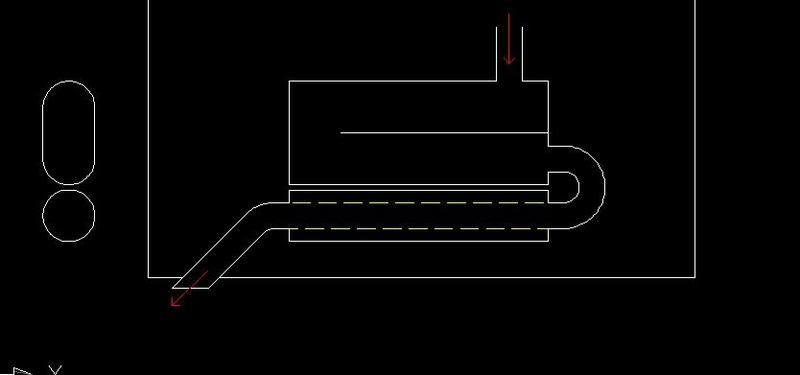
i was aiming the first bigger box to be reflection as it will slow down as it goes through the bigger volume and there will be lots of walls for it to reflect off and hopefulyl cancel otu some of the noise.
the 2nd smaller box was goign to be a conventional silencer with a perforated pipe goign down the middle with fibreglass around it so that will do the absorbsion.
hoping to apply as little restriction as possable on this for obvious reasons.
and yes i have spotted heat wrap on ebay for £30 10m of it, its goignt o be stainless as i cant be assed to make a new system every few years! also its kinda free as use alot of stainless here at work.
well i will be making the tubular manifolds over the next few days, the rest of the system will have to wait till i know exactly how much room i have.
cheers for the help tho!
Ralph
the 2nd smaller box was goign to be a conventional silencer with a perforated pipe goign down the middle with fibreglass around it so that will do the absorbsion.
hoping to apply as little restriction as possable on this for obvious reasons.
and yes i have spotted heat wrap on ebay for £30 10m of it, its goignt o be stainless as i cant be assed to make a new system every few years! also its kinda free as use alot of stainless here at work.
well i will be making the tubular manifolds over the next few days, the rest of the system will have to wait till i know exactly how much room i have.
cheers for the help tho!
Ralph